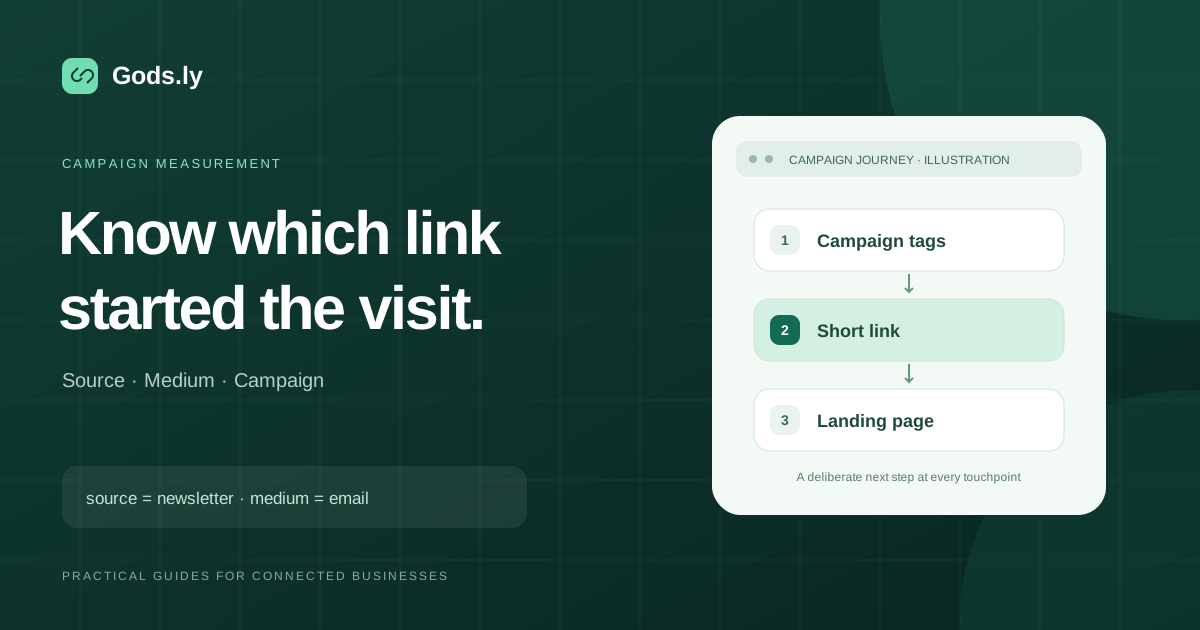
Use consistent UTM source, medium, campaign, and content values to compare short-link traffic without fragmenting your reports.
A shared vocabulary makes reports usable
UTM parameters describe the campaign behind a visit. Use utm_source for the publisher or channel, utm_medium for the distribution method, and utm_campaign for the campaign name. Optional utm_content can distinguish placements or creative variants.
Choose lowercase values and one separator convention. Values such as instagram, paid_social, and autumn_launch are easier to group than mixtures of capitalization, spaces, and internal abbreviations.
Preserve the destination and its parameters
Add campaign parameters to the complete destination before creating the short link. If the address already contains a question mark, new parameters need an ampersand. Encode values rather than concatenating untrusted text.
Use a different short link when you need a distinct placement report. A poster and a newsletter can reach the same landing page while retaining different source and medium values.
Separate acquisition from business outcomes
Gods.ly link analytics describe interactions with the managed route. The destination analytics or checkout system records completed actions. A redirect click is not proof of a sale.
Keep a naming reference with the campaign and preserve it when a teammate takes over. If a destination changes, test the full address again so the update does not discard tracking or point at a retired page.