Compare posters, packaging, and other print placements with distinct QR routes while confirming conversions at the destination.
A code identifies a placement, not a person
A QR code can connect a physical asset to a recorded digital interaction. Give each placement its own route when you need to compare a poster, counter display, receipt, or package.
Reusing one code everywhere merges the traffic and makes placement-level attribution impossible. Define the reporting question before printing.
Carry the campaign into the destination
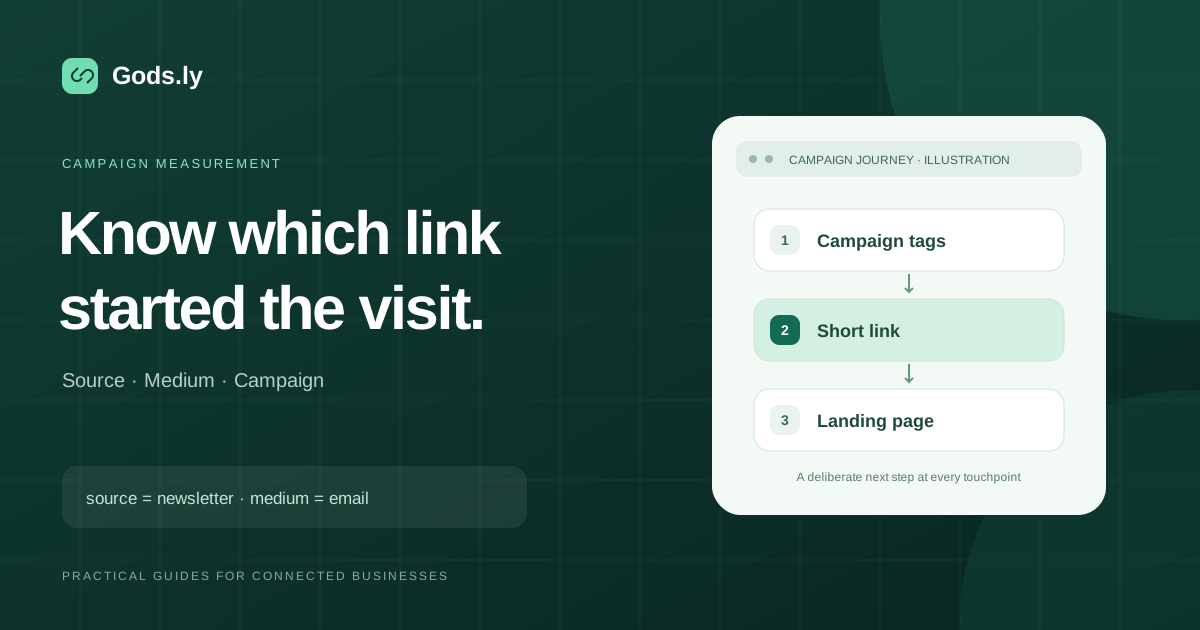
Add source, medium, and campaign parameters to the landing-page URL. A readable short address can sit beside the code as an accessible fallback.
Use a dynamic route when the printed asset will outlast the current landing page. Updating its destination preserves the artwork, but any new page still needs testing.
Report the limits alongside the result
A scan does not prove that someone bought, registered, or visited a store. Reconcile completed actions in the destination system and compare the same campaign period.
Shared links, return visits, blocked analytics, and devices that open a browser differently can affect attribution. Use the data to compare placements, while keeping those limits visible in the report.